


Sometimes you play something that sounds good… but you don't know what it is. If you don't know it, you can't reuse it.
That's where a chord identifier comes in.
Works in reverse
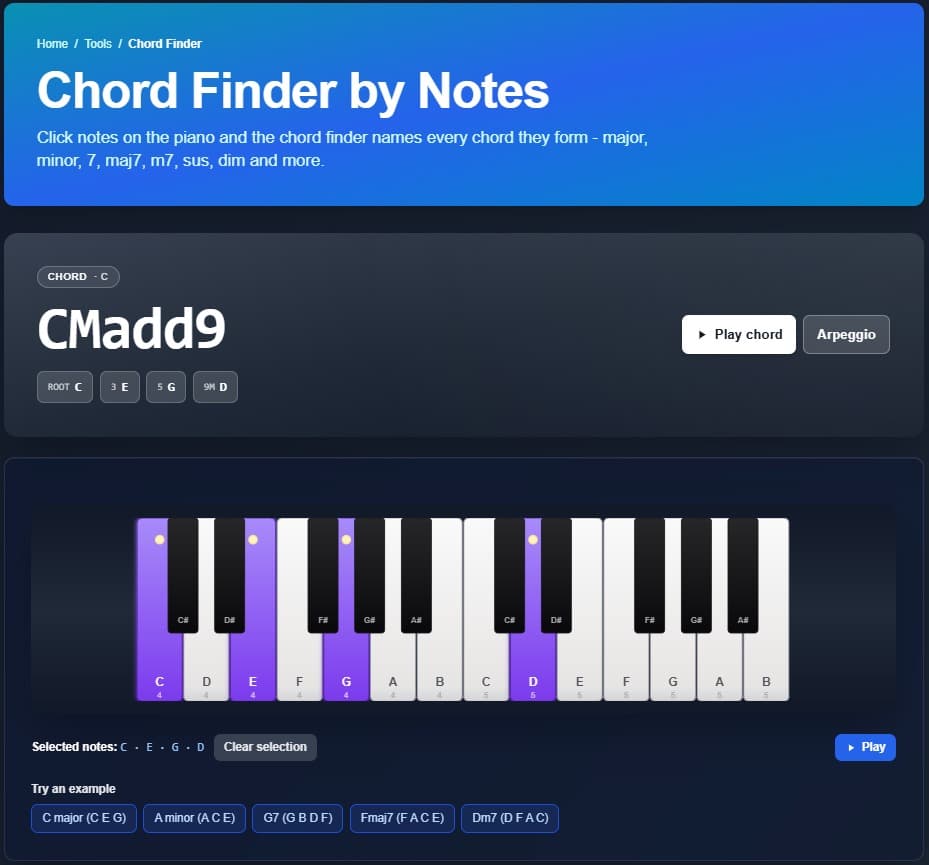
You input notes. Example: C - E - G. And it tells you: C major.
Real use
Especially useful when:
- Improvising
- Experimenting
- Stumbling upon something good
Instead of losing it:
- Identify it
- Save it
- Reuse it
Understand what you're already doing
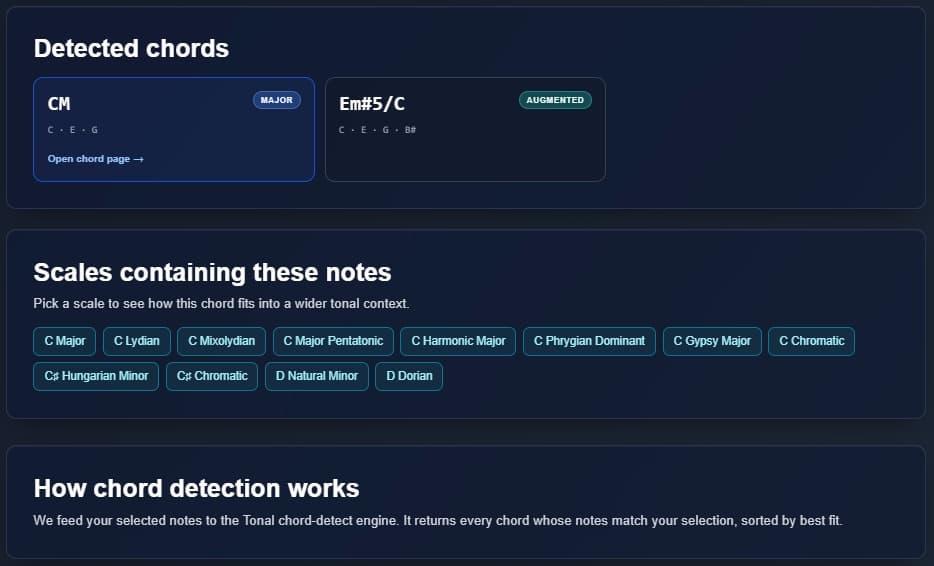
No theory needed. Just input notes and see the result. You start recognizing patterns over time.
From intuition to control
You go from: "I played something cool but don't know what it is" to: "I know exactly what this is and can use it again".
Conclusion
It doesn't teach chords. It gives context to what you're already playing - and that's what helps you improve.


