


Sometimes a progression works perfectly… just not in that key. Maybe for your voice, instrument, or comfort.
Doing it manually is slow and error-prone. That's where a transposer helps.
What it actually does
It keeps the structure and shifts everything. Example:
- C - G - Am → in D → D - A - Bm
Same relationships, different pitch.
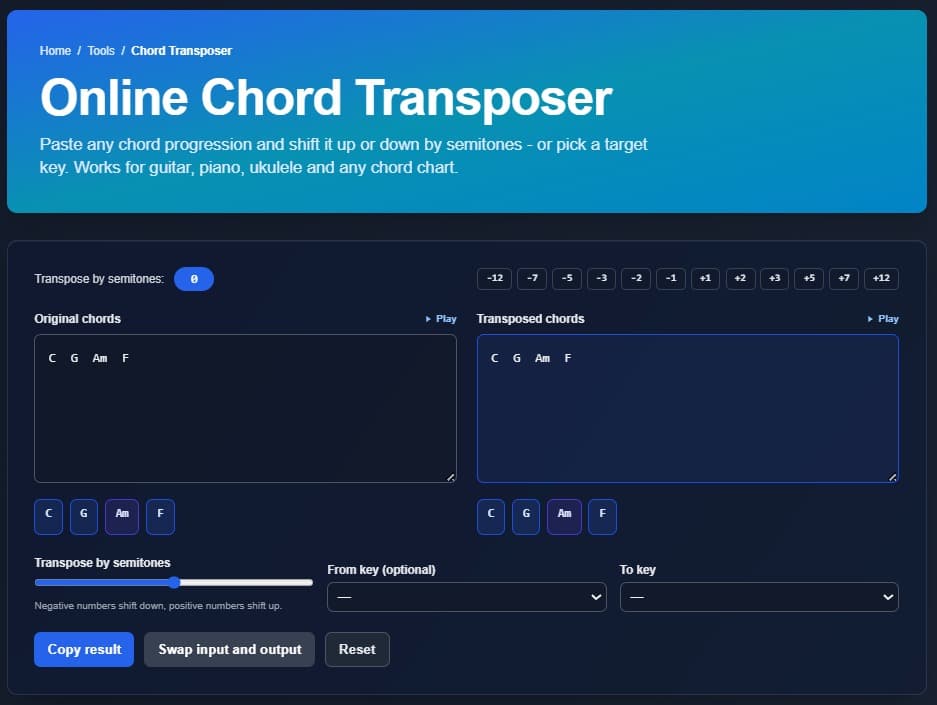
How to use it
- Enter the progression
- Choose the target key
- Done
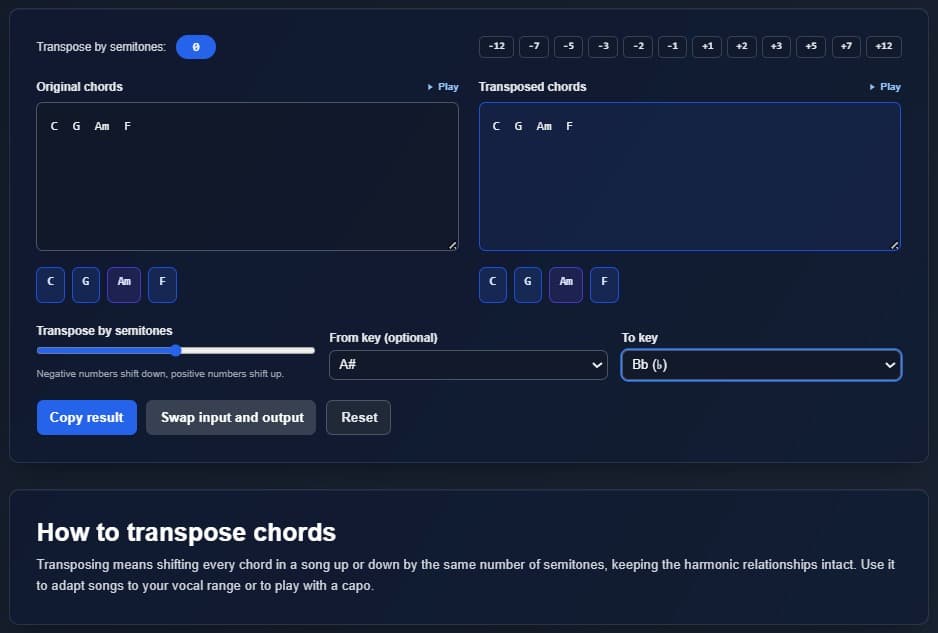
No mental math.
When to use it
- Song doesn't fit your vocal range
- You want an easier key
- You're working with someone else in a different key
Avoid common mistakes
Manual transposing often leads to:
- Wrong chords
- Notes outside the key
- Broken structure
This avoids all that.
Conclusion
Not something you use all the time. But when you need it, it saves time and prevents mistakes.


